
Many established B2B companies invested hundreds of thousands in CRMs that simply fail. They end up with expensive digital filing cabinets that don’t deliver the promised ROI. A CRM fails when the team isn’t clear on how it sells, who owns the tool, and what data goes in. The common reaction is to buy a bigger platform, but a bigger tool can just give the same unclear process more places to make mistakes.
Key Takeaways
- A failed CRM means the business has not defined its sales process.
- Out of five root causes behind CRM failure, four are about people and process.
- Data quality drops, and every automation loses value without one clear owner.
- Real CRM adoption takes three to six months, so one round of training is not enough.
What does CRM Project Failure Mean?
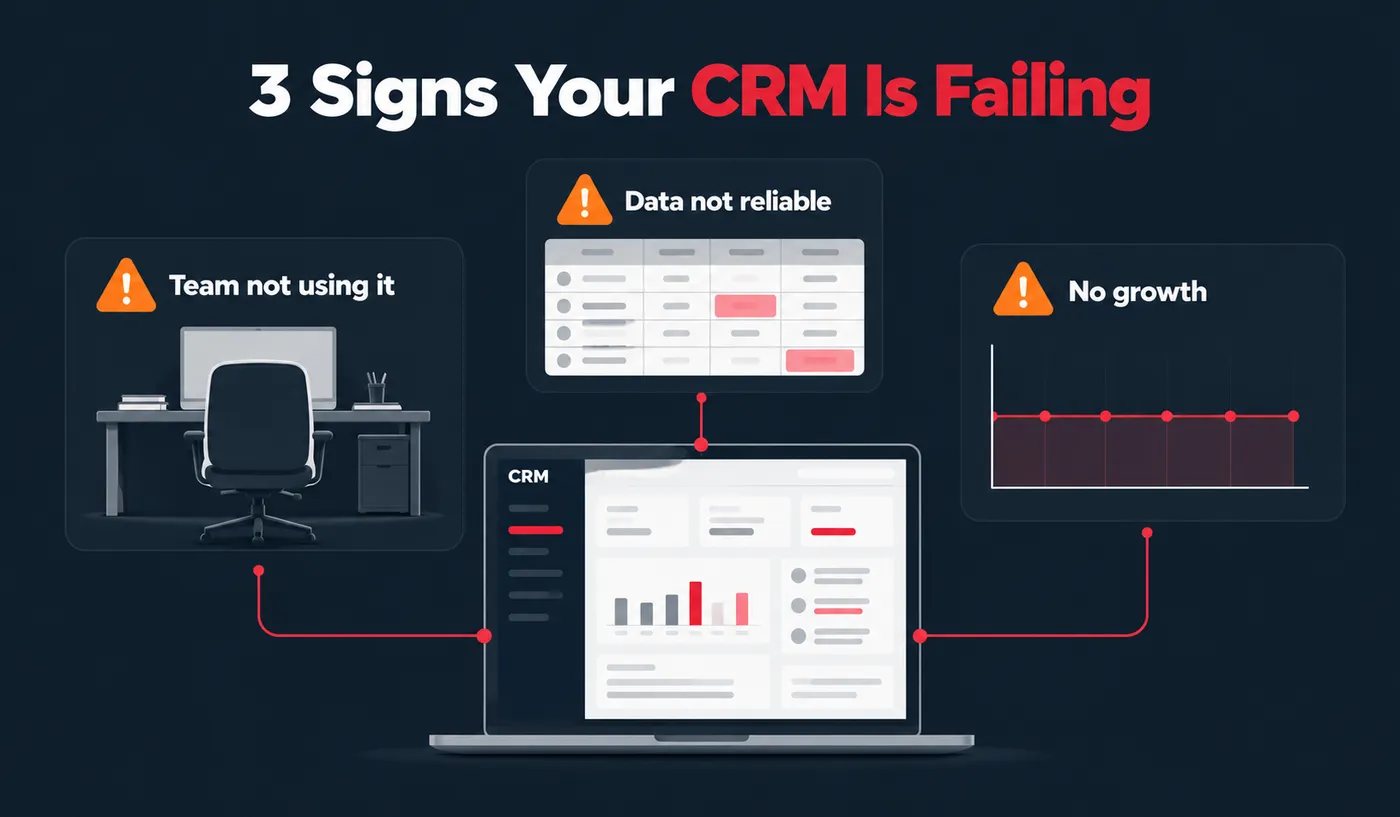
CRM project failure does not mean the entire system has broken down. In several situations, the CRM software works as expected, but the business isn’t seeing its real value. CRMs often seem like a failure when teams rarely use the tool, data becomes unreliable, or expected growth is not achieved. If your CRM feels like it is not working, check your follow-up before you switch tools.
A failed project reflects poor CRM use, low buy-in from front-line sales professionals, and user dissatisfaction. Poor data quality, weak data governance, and inconsistent data entry are visible ways of CRM failures.
Why CRM Implementation Fails
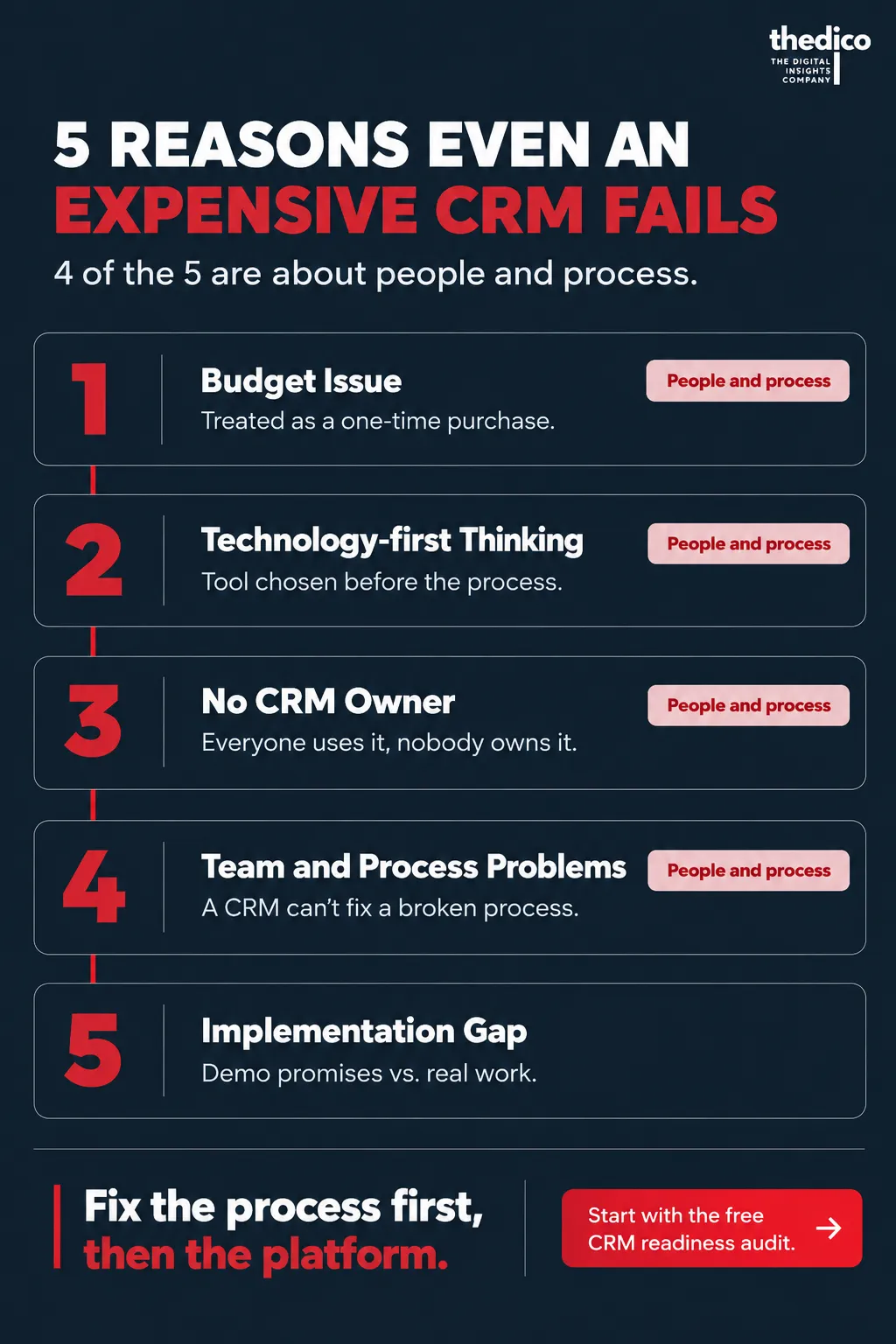
Here are the five root causes behind why most expensive CRM implementations fail in B2B companies; out of the five, four are about people and process:
The Budget Issue
The first mistake B2B companies make in CRM is treating it as a one-time purchase before even choosing a tool. They allocate budget, do some initial training, and believe it is enough. CRM transformation needs continuous focus and investment in people, processes, and improvement. This is a capability you build over time.
Technology-first thinking
Selecting CRM platforms before defining business processes and requirements means force-fitting operations into software. B2B companies’ most expensive CRM implementations fail because they take a technology-first approach instead of aligning CRM with business needs. The correct way is to focus on how CRM capabilities will transform customer relationships.
Absence of CRM ownership
The lack of dedicated CRM ownership is probably the main reason even the most expensive CRM systems fail. After the tool is integrated into the system, the responsibility is distributed. IT maintains the servers, sales uses the system, and marketing puts in the data, but nobody owns the overall success. Without dedicated ownership and ongoing maintenance, data quality declines, undermining every insight and automation the system might provide. Often the founder ends up holding it all, and that is how founder-led marketing becomes a bottleneck.
Team and process problems
A CRM can automate and speed up an ongoing process but can’t fix a broken one. If your team doesn’t have a clear way of working, even the most expensive CRM can only make the mess faster and easier to see. CRM problems come when no one owns the data, teams follow different habits, and staff see it as an additional task. That’s why two companies can buy the same tool and get completely different outcomes. The same habits explain why B2B sales teams lose deals, and it is rarely the price.
Implementation Gap
Even when the CRM budget gets approval, the implementation phase reveals several gaps between vendor promises and actual reality. During sales demonstrations, vendors present polished workflows and seamless integrations that are far from the messy reality of business processes. Teams learn to use the software after a few hours of basic system navigation. When it comes to complex customisation needs or integration challenges, teams struggle daily to find the right solutions.
What Happens After You Find the Gap? What to Do First
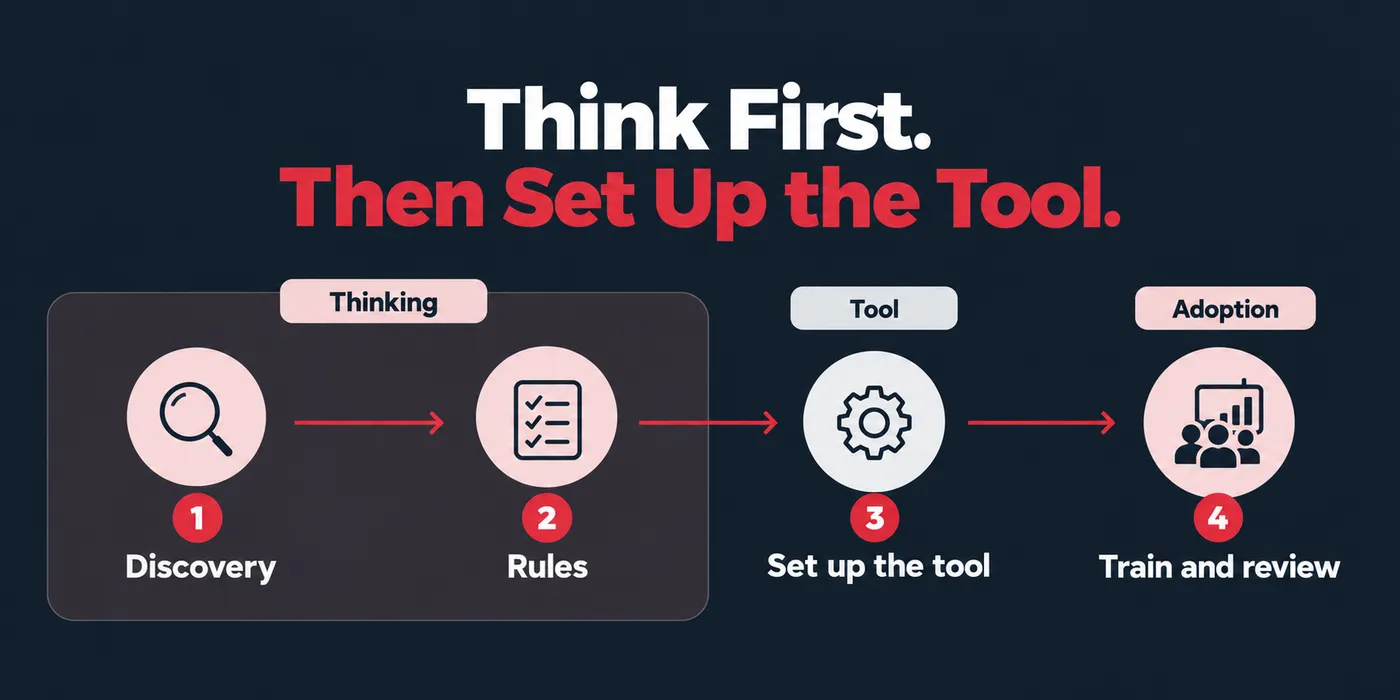
If you find a gap in your CRM, start with process, not platforms. Understand how your business actually works. First, define how you want it to work; then clean your data, plan your integrations, and invest in adoption. Getting the human and process elements right decides where implementations succeed or fail.
Do I Need a CRM Audit? A Quick Self-Assessment For B2B Companies
If you still ask your team for Excel sheets to see the real pipeline, your CRM may not be doing its job. A short checklist can tell you in two minutes if it’s time for an audit. It’s a free PDF you can share with your team or use before your next CRM decision.
A Better Way to Implement CRM
The correct way to implement CRM is with discovery. Plan the complete customer journey and sales workflow before you decide fields, automations, or dashboards. Talk to the salespeople who sell, estimate, and service accounts, then define the operating rules: account ownership, pipeline stages, qualification, and required data. Configure the technology around those decisions, then use marketing automation and AI to fix the leaks.
A focused first release with a usable pipeline, clean account structure, essential activities, and a few decision-ready reports can solve every problem at once. Train users on their real scenarios, and keep reviewing adoption and data quality after launch.
Frequently Asked Questions
Filed under
- Why CRM fails
- CRM implementation
- CRM audit