Key Takeaways
- 5 to 7 follow-ups after the initial contact is suitable for B2B leads.
- The exact number depends on account fit, deal value, buyer role, channel, and timing.
- Stop on a clear no, and clearly mention the reason in your CRM.
- Keep changing the reason for responding in your follow-up messages.
You have crafted an engaging email or prepared for an engaging phone call. You have connected with a potential customer, and they seem interested. Don’t sit back and wait for the lead to call you back.
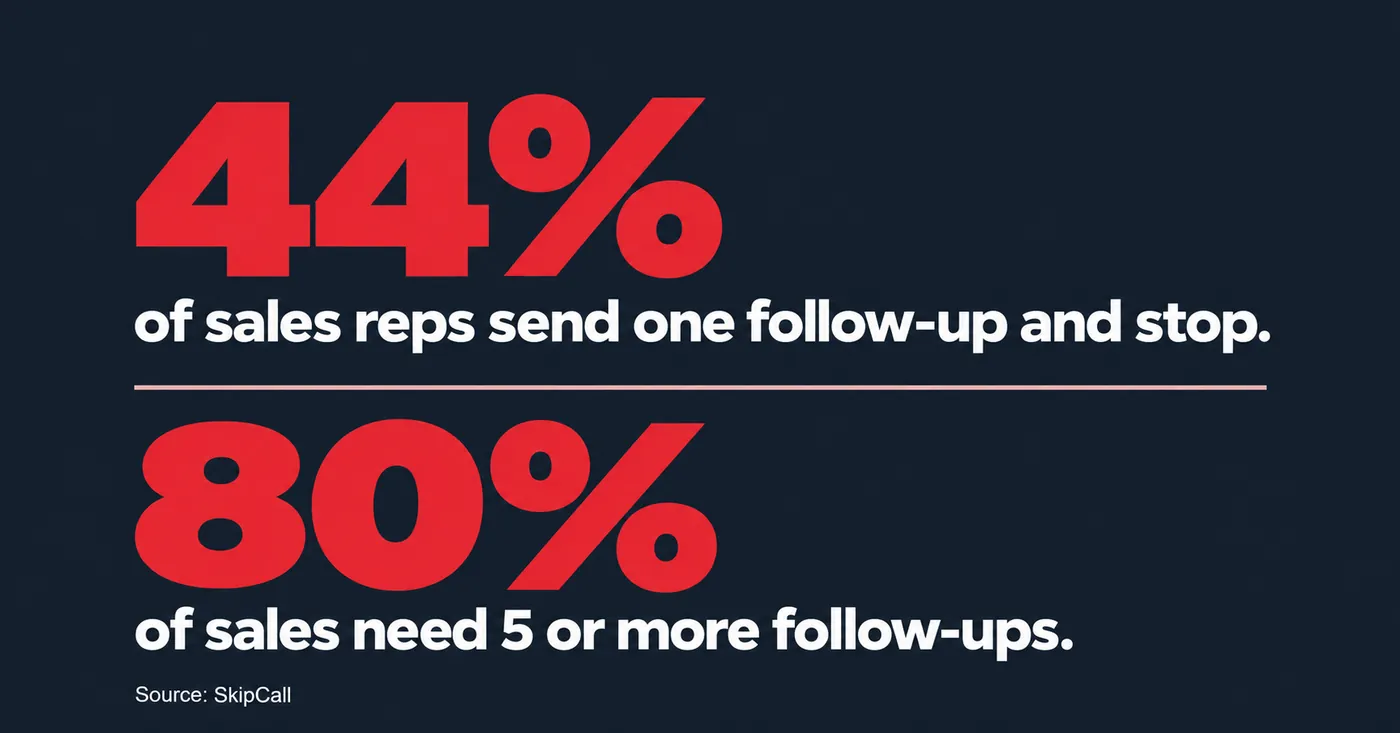
According to SkipCall, 80% of successful B2B sales require 5 or more follow-up touches before they close, and 44% of representatives send just one follow-up and move on. It shows almost half of all outbound effort stops at the moment when the data says the pipeline is getting shaped.
With the right strategy, you can double your conversion. But what does an effective follow-up process look like, and how many follow-ups does a B2B lead get? Keep scrolling to get the strategies.
Why Does One Follow-Up Not Work, and What Do Sales Follow-Up Statistics Say?
Customers are often busy: some have limited time after work, and some run their own company and have little time for anything else. In their busy schedules, they miss a single reminder; that’s why one follow-up doesn’t work, because most buyers need more than one reminder to reply.
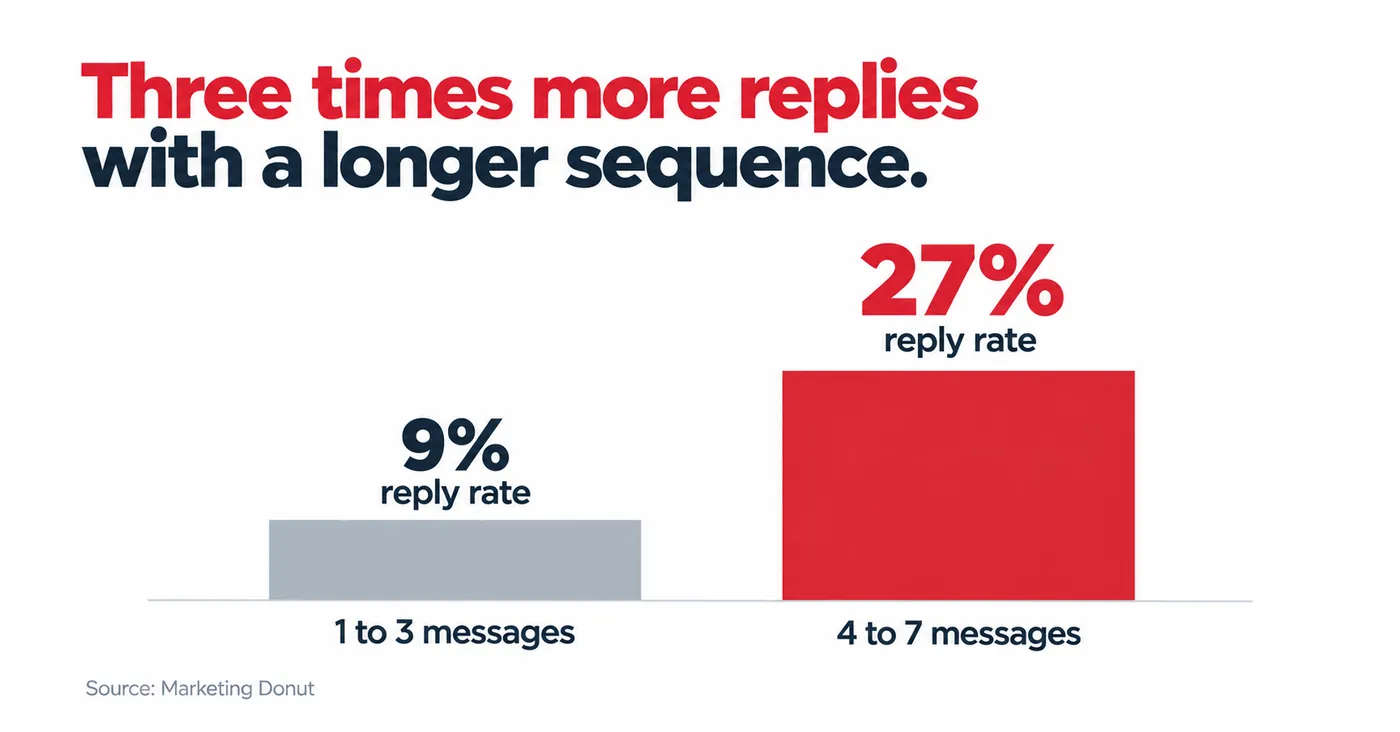
Marketing Donut reports that about 80% of sales required five or more follow-ups. While more is not always better, you still need the right follow-up sequence. On average, 4 to 7 messages get about a 27% reply rate, compared with 9% for 1 to 3 messages. The message is more important than the overall count.
What Is a Good Sales Follow-Up Timeline?
Here is a complete follow-up timeline structure; use it as a starting point, then adjust it to your sales cycle.
- Day 1, first contact: Reply to a new inquiry within 12 to 24 hours for the best results.
- Day 3, email with one key detail: Share one important piece of information that the customer wants to know.
- Day 7, phone call: During the phone call, go straight to the point and talk about their needs.
- Day 10, LinkedIn message: When sending a LinkedIn message, avoid long ones; always keep it short and friendly.
- Day 15, email with short proof: Share a result or example in the email to back your words.
- Day 21, ask if someone else owns this: When you connect with several people at one company, your response rate increases.
- Day 28, closing note: End the active sequence politely and offer customers the option to pick it up later.
The first reply sets the pace for everything after it. If you want a simple plan for the first 10 minutes, read our guide on B2B lead response time.
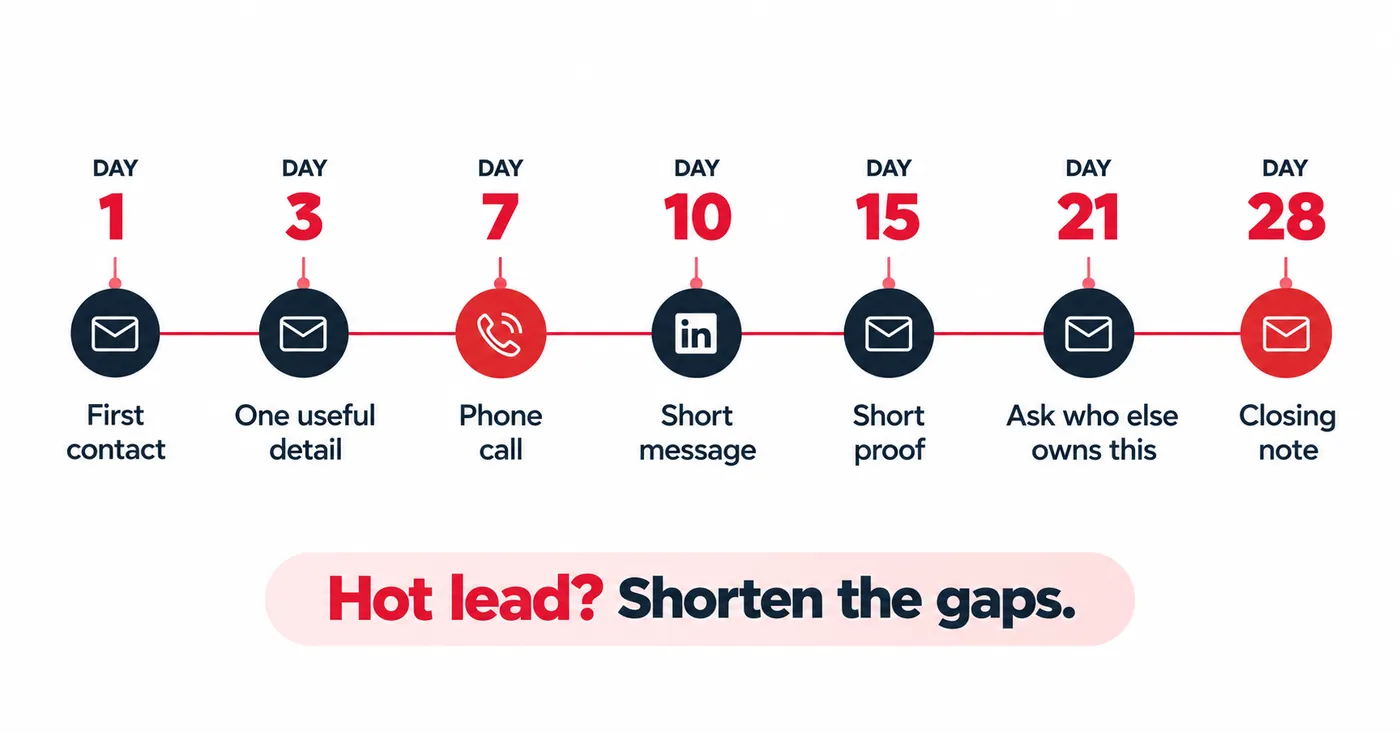
Consider shortening the gaps for hot leads, like someone who opens emails, clicks a link, or visits your pricing page. Avoid following up daily unless you truly need that pace.
If you are not sure where your leads get stuck, check how TheDIco’s growth audit and strategy reviews your marketing process.
What Should Each Message in Your Follow-Up Sequence Include?
When you prepare a follow-up message, your priority should be giving a new reason each time. It can be a useful detail, proof, a different angle, or a question for the right audience. Avoid using generic lines like “just checking in”.
Keep your ask small, with one quick question like: Would a 15-minute call next week help? Inventing a deadline isn’t effective anymore; share the real message instead of a fake last chance.
Which Leads Deserve More Follow-Ups, and When Should You Stop?
Not all leads logged in your CRM deserve the same effort. Focus more on leads that fit your ideal customer, have a clear need, and show interest. You can tell by email opens, link clicks, or page visits. Do fewer follow-ups for leads that aren’t a fit, have the wrong role, or have outdated contact details. Leads often go cold in the gap between marketing and sales. Our guide on sales and marketing alignment shows how to fix it.
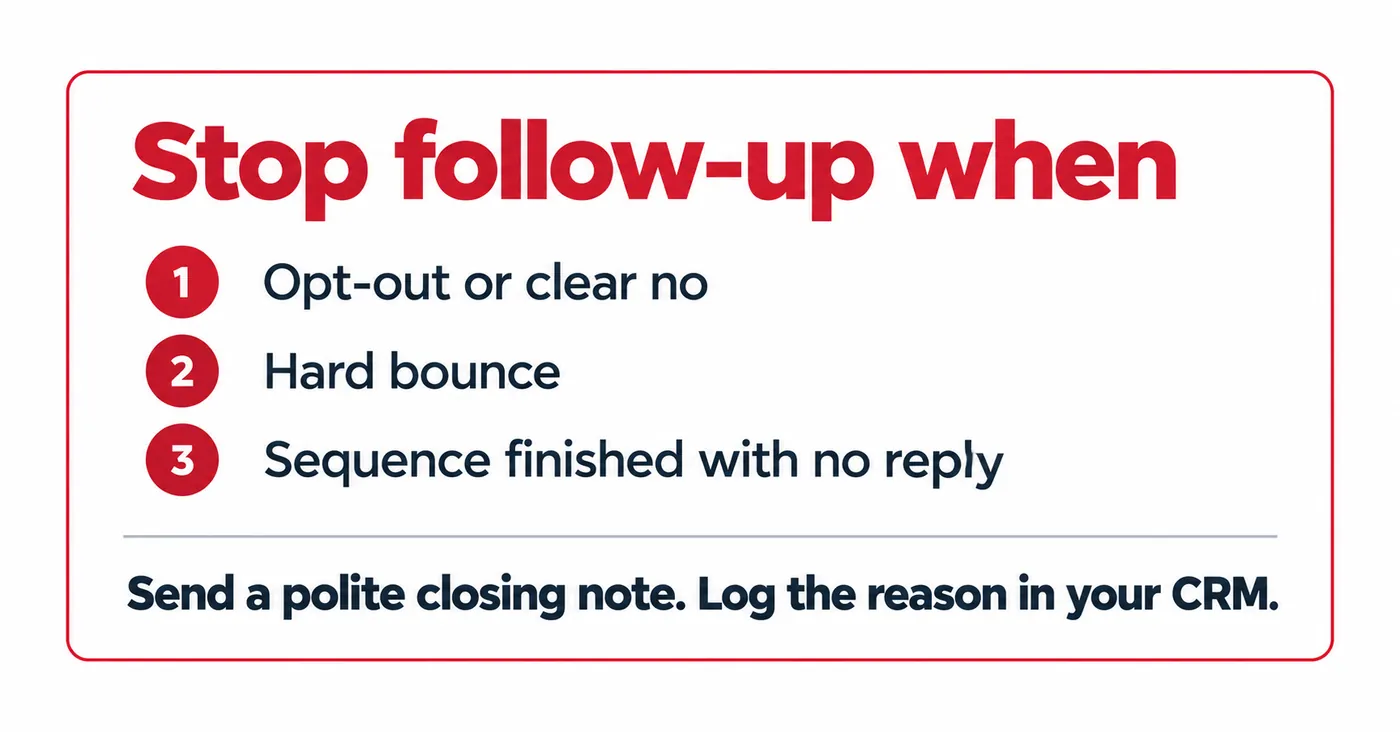
You should stop following up when:
- The lead opts out or says a clear no.
- The email hard bounces.
- You finished the sequence and got no reply.
When you decide to stop, send a polite closing note. Also log the reason in your CRM, and set a date to reconnect.
Frequently Asked Questions
Filed under
- Lead follow-up
- Sales follow-up
- Follow-up sequence